
Swords Buyer Guide RSS Feed
20 Oct

0
11
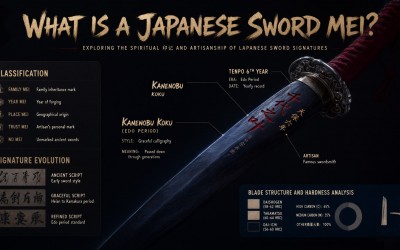
What Is a Japanese Sword Mei? Understanding Sword SignaturesA Japanese sword carries many details that can help collectors understand its construction, craftsmanship, and history. One of these details is the mei (銘), a signature or inscription tra..
17 Oct
0
183
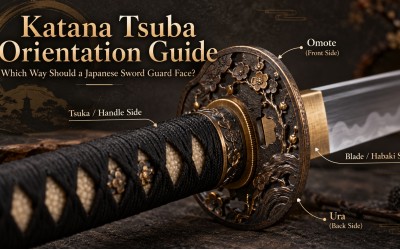
Japanese Sword Fittings & Craftsmanship GuideKatana Tsuba Orientation Guide: Which Way Should a Japanese Sword Guard Face?By HanBon Forge Editorial Team | Published October 17, 2026 | Japanese Sword FittingsThe tsuba (鍔), or Japanese ..
15 Oct
0
169
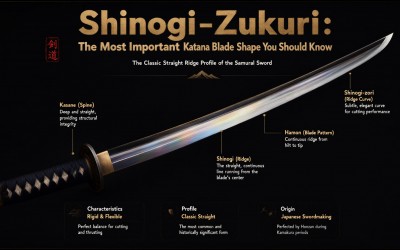
Shinogi-Zukuri (鎬造り) is one of the most recognizable blade shapes in traditional Japanese swordmaking. Its distinctive raised ridge, defined blade surfaces, and classic kissaki geometry are closely associated with the traditional katana.Qui..
10 Oct
0
332
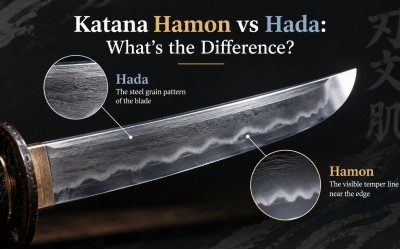
Hamon and hada are two distinctive features of Japanese katana blades, but they are formed through different processes. Hamon is the visible hardened-edge pattern associated with differential heat treatment, while hada is the forged steel grain vi..
05 Oct
0
418
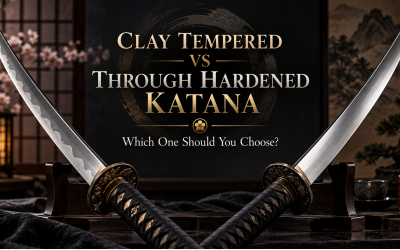
Clay-tempered and through-hardened katana use different heat-treatment methods, producing different hardness distributions and blade characteristics. Clay-tempered swords can feature a genuine hamon and a harder edge relative to the spine, while t..
30 Sep
0
571
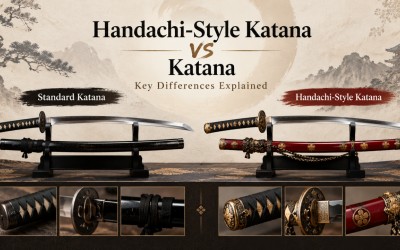
A Handachi-style Katana differs from a standard Katana mainly in its sword mountings, not its blade. Handachi (半太刀), meaning "half-tachi," combines Tachi-inspired fittings with Katana-style wearing conventions. Learn how to identify Handachi koshi..
25 Sep
0
461
Choosing the right katana saya involves more than selecting a color or decorative finish. A properly fitted Japanese sword scabbard protects the blade, supports safe retention, and completes the overall appearance of the sword. This guide compares..
20 Sep
0
632
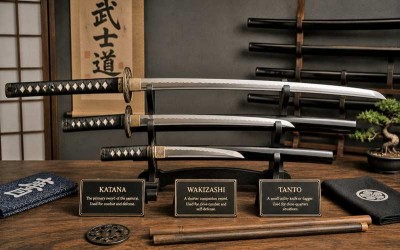
Katana, Wakizashi, and Tanto are three traditional Japanese blade types distinguished mainly by their length, historical roles, and mounting conventions. A Katana is generally a long sword with a blade over 60 cm, a Wakizashi typically measures 30..
15 Sep
0
554
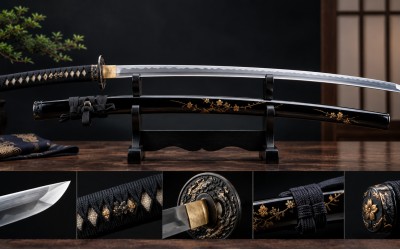
How to Tell if a Katana Is Well Made: 10 Things to Check Before BuyingBuying a katana can be confusing, especially if you are purchasing your first Japanese-style sword. Two swords may look very similar in photos while having significant differenc..
10 Sep
0
484
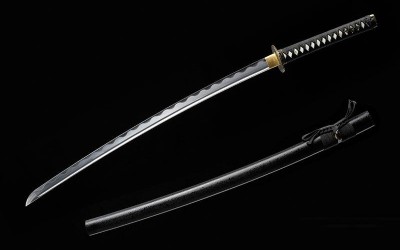
How to Choose Your First Real Katana: A Beginner's Buying GuideBuying your first real katana can be an exciting experience, but choosing the right Japanese sword is not always easy. With so many different blade materials, forging methods, fittin..
25 May

0
7876
Tanjiro Sword Explained: The Meaning Behind the Black Nichirin BladeAnime fans around the world recognize Tanjiro Kamado’s iconic black Nichirin sword from Demon Slayer: Kimetsu no Yaiba. Among all the swords used by the Demon Slayers, Tanjiro’s kata..
07 May

0
4430
Genuine samegawa (ray skin) has a naturally irregular pattern of hard, pearl-like nodules, while fake samegawa is usually made from molded synthetic materials. Texture, surface hardness, backing material, and seller specifications can help disting..
04 May

0
2576
Buying your first katana? Before choosing a Japanese sword, consider five essential factors: intended use, blade steel, tang and handle construction, heat treatment, and customization. This beginner-friendly guide from HanBon Forge explains how to..
25 Aug

0
14439
The katana is one of the most recognizable and revered swords in the world. Known for its distinctive curved blade, razor-sharp edge, and cultural significance, the katana is more than just a weapon—it is a symbol of the samurai spirit, Japanese craf..
19 Jun

0
24056
Choosing the right katana tsuba involves more than selecting an attractive sword guard. Material, shape, size, weight, craftsmanship, symbolism, and compatibility with the other sword fittings all matter. This guide explains how to choose between ..
25 Dec

0
66455
Clay tempering is a traditional Japanese swordmaking technique used to create a differentially hardened katana blade with a genuine hamon. The process involves preparing the steel, applying a refractory clay mixture, drying the coating, heating th..
28 Sep

0
32265
Hishigami are small, carefully shaped paper supports placed beneath the tsuka-ito during traditional Japanese sword handle wrapping. They help form consistent diamond-shaped openings, support neat cord transitions, and contribute to the quality of..
28 Feb

1
21450
5 Benefits of Carbon Steel Swords: Steel Types & Buying GuideThe steel used for a sword has a direct effect on its hardness, toughness, edge performance, appearance and maintenance requirements.For this reason, carbon steel swords remain popular amon..
19 Jan

0
20423
Double Edged Katana: History, Design, Differences and Buying GuideWhen most people imagine a Japanese sword, they picture the classic katana — a curved blade with a single sharp edge, carried by samurai and recognized around the world for its beauty..
12 Jan

2
20915
Japanese Koshirae: Types, Parts and Katana MountingsWhen people think about a Japanese sword, the blade is usually the first thing they notice. But a traditional Japanese sword is more than a blade. The handle, guard, scabbard and other fittings all ..
11 Dec

2
24143
History and Origins of the Bronze SwordThe bronze sword was one of the most important developments in the history of ancient weapons. Long before steel became the dominant material for sword making, bronze allowed ancient craftsmen to create stronger..
12 Nov

0
19251
Japanese Sword Polishing: How a Katana Is Polished and Why It MattersA Japanese sword is not finished when the blade comes out of the forge.After forging, heat treatment, shaping, and hardening, the blade still needs to be carefully polished. Japanes..
08 Nov

0
19887
Chinese Hook Sword (Shuang Gou): History, Design and Martial ArtsThe Chinese hook sword, commonly known as Shuang Gou (双钩) or Shuang Gou Jian, is one of the most distinctive weapons associated with traditional Chinese martial arts. Unlike a conventio..
03 Nov

0
39274
Bronze Sword vs Iron Sword vs Steel Sword: What Is the Difference?When looking at the history of swords, one of the biggest changes was the transition from bronze to iron and eventually to steel.The material used for a sword blade affects its hardnes..
27 Oct

0
17973
Wodao: History, Design and the Japanese Influence on This Chinese SwordThe Wodao (倭刀) is one of the most interesting examples of the interaction between Chinese and Japanese sword traditions. Associated particularly with the Ming Dynasty, the Wodao w..
23 Oct

0
19745
Liuyedao: The Willow Leaf Saber of ChinaThe Liuyedao (柳葉刀), commonly translated as the willow leaf saber, is one of the best-known forms of traditional Chinese dao. With its graceful curved blade and practical balance between cutting and thrusting, t..
19 Oct

3
30460
The Battlefield Role of the ŌdachiA Powerful Weapon for Open CombatThe primary purpose of the Japanese Ōdachi was battlefield combat.During periods of intense warfare, especially the Nanbokuchō period (1336–1392), large swords became popular among wa..